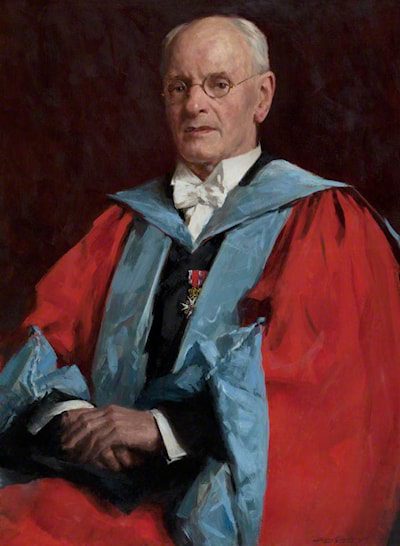

Edinburgh is a city with a stunning energy, incredible landscapes, and remarkable people. Many of these individuals are multi-talented, which is perhaps why so many world-renowned figures in various fields were born here. Artists, musicians, writers, scientists, and architects—all embody the true spirit of Edinburgh. Learn more at edinburghyes.
Among these gifted individuals, politicians hold a special place. They are the ones who work tirelessly to ensure that living conditions in Edinburgh meet the highest standards.
Given the city’s long and rich history, it’s no surprise that its political scene is vibrant and filled with influential names. Many of these figures have become synonymous with beneficial work for their home city.
However, you’ll likely agree that the city’s leaders, the Lord Provosts, play a particularly crucial role. They are ultimately responsible for the city’s development and improvement, a position that carries immense responsibility.
The history of Edinburgh is marked by many individuals who had the honour of leading the city. Each one managed to leave their own unique mark during their time in office.
John Garnett Banks was certainly no exception. As Lord Provost, he achieved a great deal for the welfare of his native Edinburgh.
It is important to note that he held the post for a relatively short period, until 1957. Nevertheless, this was ample time for John to achieve remarkable results and significantly improve the city.
As the old saying goes, where there’s a will, there’s a way. Banks was a living testament to this age-old truth.
Early Life
The future politician was born in Edinburgh on 9 May 1889.
Interestingly, early in his career, there was little to suggest he would one day enter politics, let alone become Lord Provost.
As of 1932, his entire career was focused on valuing houses in Edinburgh. Banks excelled in his role, and it seemed he was perfectly content with his life’s path.
Political Career
But 1936 marked a pivotal moment in John’s life. It was the year he became a member of Edinburgh’s Town Council. In 1950, his political journey continued as he was appointed City Treasurer, a position he held until 1953. After that, his political career reached new heights.
A New Role
In 1954, John was elected to the prestigious post of Lord Provost—the traditional title in Edinburgh for the person who essentially performs the duties of a city mayor.
The authority of this office allowed John to fully realise his potential.
Notably, in 1956, he was responsible for overseeing the closure of the city’s original tram system. This decision was driven by the fact that the network was highly inflexible, particularly in relation to modern bus transport.
Housing Renewal
Furthermore, during his time as Lord Provost of Edinburgh, John managed a colossal undertaking. It was with his approval that the long-overdue “slum clearance” in the central areas of Leith and The Canongate was finally carried out.
It’s worth noting that such clearances were part of a wider urban renewal strategy across the United Kingdom. The primary goal was to transform settlements known for low income and poor reputations into updated, modern housing. This strategy was first implemented in the northern cities of the country.
Returning to Edinburgh, it is important to highlight that after the clearance, the vacant plots were used to significantly improve the housing conditions for the local population.
All the buildings in these areas were modernised, leading to greatly improved two and three-storey homes.
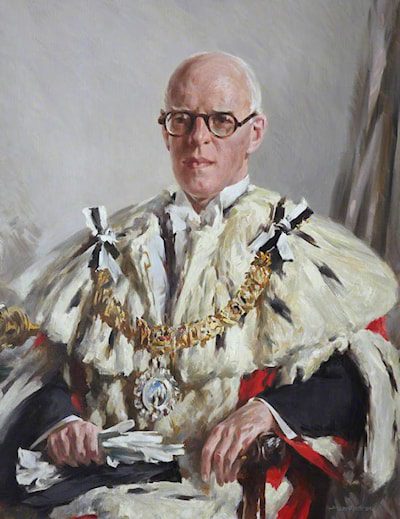
Thus, John Garnett Banks cemented his place in Edinburgh’s history as one of its most effective Lord Provosts, despite his relatively short time in office.
This did not prevent him from implementing crucial initiatives that played a major role in the city’s development and enhancement. Indeed, his achievements are forever etched in the city’s history as examples of dedicated work and honest service.
Banks passed away on 2 May 1974, but his memory lives on as a vital part of Edinburgh’s heritage. He was a true patriot, for whom love for his home city was more than just words. Instead of a thousand speeches, he chose real action, the results of which laid a solid foundation for future improvements and development.
In this, John is a prime example. His biography clearly shows that for this man, actions spoke louder than words. That is why his tenure as Lord Provost can be fairly described as one of the most productive and fruitful in the city’s modern history.