

The history of Edinburgh is the guardian of many famous names. These individuals achieved great success in various fields: in culture, science, sport, and, of course, politics.
Among Edinburgh’s political figures, one can find many characters whose biographies are particularly fascinating—so much so that a book or even a film could be based on them. William Brodie is certainly one such figure. Although he was considered a highly respectable man, William’s secret life was filled with less than honourable and lawful deeds. Find out more at edinburghyes.com.
Born with a Silver Spoon
Brodie was born on 28 September 1741 in Edinburgh. His father held a very prominent position in society, and thanks to him, William inherited a fine cabinet-making business. In addition, the young man came into a magnificent house and a considerable fortune.
As a result, William gained a reputation as a respectable tradesman and became the Deacon of the Incorporation of Wrights and Masons. This effectively meant that Brodie controlled the entire carpentry trade in Edinburgh. Under his leadership, many items of furniture and interior fittings were crafted, a fact that led to him becoming a member of the city council.
The wealth and esteem Brodie commanded brought him into high society. It is no surprise that he was personally acquainted with many members of the gentry. His connection with political figures was a matter of common cause; as a member of Edinburgh’s city council, William was involved in resolving the most important local issues.
A Double Life
Besides making furniture, Brodie also oversaw the installation and repair of locks. Consequently, he was intimately familiar with the security mechanisms of Edinburgh’s wealthiest homes. Furthermore, it was often necessary to make a wax impression to craft new keys.
There was seemingly nothing unusual about this. After all, William’s business, like the man himself, was held in high regard by society.
However, Brodie himself led a double life. By day, he was a respected, wealthy man, but by nightfall, he transformed into a genuine criminal and scoundrel. For his “dark deeds,” he frequently used his knowledge of locks, keys, and access to the homes of Edinburgh’s richest inhabitants.
Secret Affairs
Gambling, mistresses, and illegitimate children were all integral parts of William’s secret life.
Brodie’s criminal “career” began around 1768. On that occasion, he managed to make a copy of a bank’s keys and, entering the premises unimpeded, stole a huge sum of money.
Later, William grew bored of working alone, and in 1786 he organised a whole gang. His accomplices in crime were George Smith, a locksmith; Andrew Ainslie, a shoemaker; and John Brown, a convicted thief who had escaped from prison.
A New Level
Interestingly, no one in society suspected Brodie’s secret affairs. His authority remained so great that in 1788, he was chosen to serve on a jury at the High Court.
The Unmasking
But, as we know, all secrets eventually come to light. And when it comes to criminal activities, this unwritten rule is practically cast-iron.
And so, Brodie’s deeds one day led to his complete unmasking.
It happened in 1788, when he organised an armed raid on His Majesty’s Excise Office in the Canongate. Brodie, Smith, Ainslie, and Brown arrived at the scene dressed in black. William and John were armed.
Fortunately, however, the criminal plan failed. The culprits were spooked and fled.
But society had already become aware that a terrible deed was being planned.
At that point, William’s gang member, John Brown, decided to approach the authorities to ask for a King’s Pardon, which had been offered after a previous robbery.
Interestingly, Brown named only Ainslie and Smith, making no mention of Brodie. Of course, George and Andrew were arrested.
The next morning, William himself expressed a desire to visit his associates in prison, but this request was denied.
The Escape
Like any other criminal in a similar predicament, Brodie gave serious thought to leaving the city.
His first destination was London, from where he fled to the Netherlands. He then planned to make his way to the United States.
It is important to note that during his escape, William was pursued by a King’s Messenger, George Williamson. At one point, Williamson lost the criminal’s trail but picked it up again in Amsterdam. It was there that Brodie was arrested and returned to his native Edinburgh.
The Trial

The trial of Smith and Brodie began on 27 August 1788. Initially, there was little evidence against William himself, despite the fact that a great deal of interest was discovered in his house and workshops, including weapons, masks, and copied keys. But Brown and Ainslie provided all the necessary evidence, and so Brodie and Smith were officially found guilty.
A Grisly End
On 1 October 1788, Smith and Brodie were publicly executed by hanging. A crowd of 40,000 was present.
Interestingly, legend has it that William attempted to cheat death by wearing a special silver tube and a steel collar. Moreover, rumours circulated that he had bribed the hangman to ensure his body was removed quickly from the gallows, supposedly to save him.
Whether this was true or not is unknown, but William did not manage to escape death. After the hanging, he was buried in an unmarked grave in the north-eastern part of the kirkyard at St. Cuthbert’s Chapel of Ease.
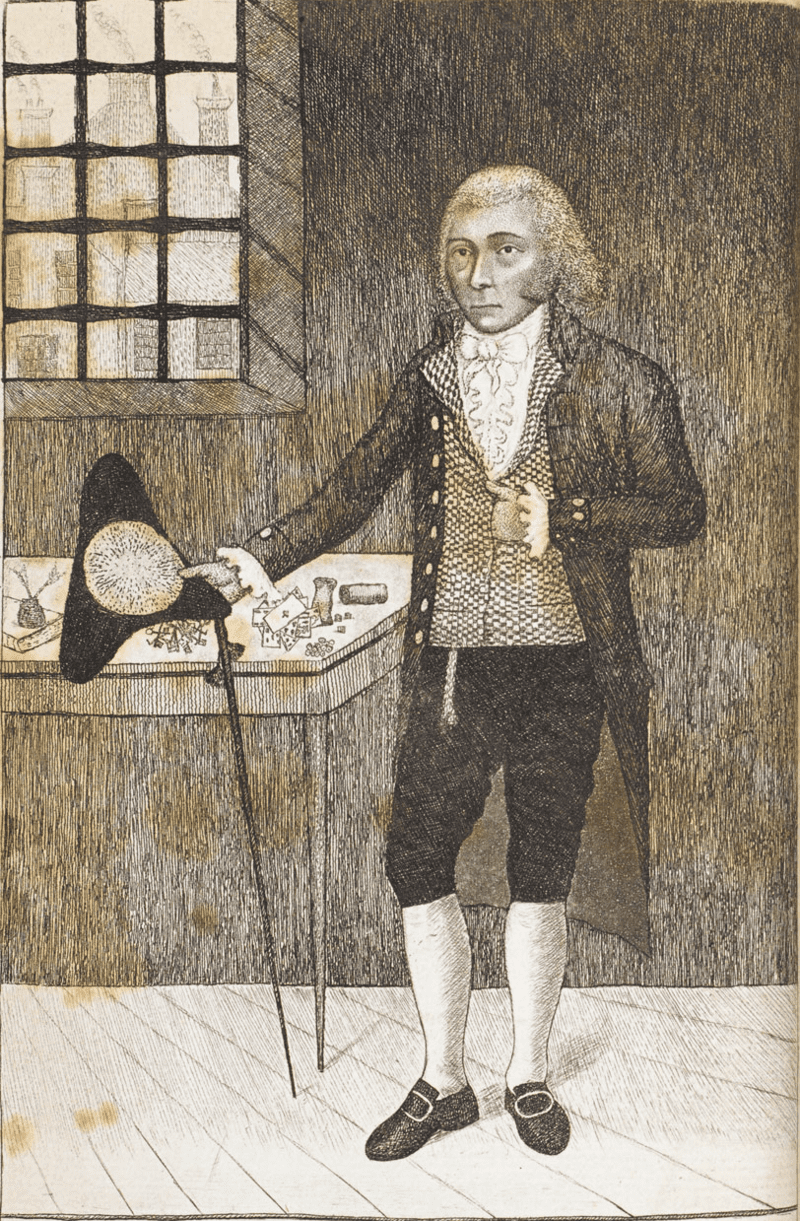
Thus, William Brodie can be seen as an example of a man driven by criminal curiosity and an incredible, unhealthy thirst for thrills. Despite his high standing in society, universal respect, and wealth, he could not hold onto it all. The reason was his excessive indulgence in illegal activities.
Or perhaps, through his “secret nightlife,” Brodie was trying to find another way to assert himself, or to fill an emotional void left by his legitimate “daytime life”… Unfortunately, even after all these years, this question will remain unanswered.