

Political life in Edinburgh has always been vibrant. Numerous figures have held vastly different views on how to manage the city and address the needs of the local community. However, they share a common goal: driving the Scottish capital’s economy, social policy, culture, and tourism. Achieving this requires identifying the most effective development paths and implementing the right changes. It is often easy to introduce radical innovations, yet their practical impact remains untested and unpredictable. Read more at edinburghyes.
The true art of a skilled politician lies in finding solutions that deliver excellent results without causing undue stress to the public.
In other words, political management within a single municipality is a complex challenge. Success in this field requires more than just expertise in one area; it demands the ability to understand and swiftly switch between various sectors. Life in any administrative unit is multifaceted, making mobility a vital trait for those at the helm.
Women as Formidable Competitors in Politics
Remarkably, Edinburgh’s political scene features many women who prove to be excellent administrators, matching their male counterparts in every aspect of the role.
Eleanor Thomson McLaughlin is a prime example. She established herself as a highly talented politician with a keen ability to analyse situations, take responsibility, and deliver tangible benefits.
A Landmark Event
Eleanor McLaughlin served as the Lord Provost of Edinburgh from 1988 to 1992. She secured her place in history as the first woman and the first Roman Catholic to hold the prestigious office.
Representing the Labour Party, she remained a central figure in the City Chambers throughout her tenure.
Undoubtedly, McLaughlin had to overcome significant barriers to reach this position, especially given that her predecessors had been exclusively male.
Her election was also a milestone for her party, as she was only the third Labour representative to ever serve as Lord Provost.
Stance and Perspectives
As a politician, Eleanor was known for her firm convictions. Interestingly, her early views were rooted in opposition to devolution. However, as her career progressed, she increasingly leaned towards supporting Scottish independence. Following the success of the devolved parliament, she came to see it as a vital step towards social justice.
During her time as Lord Provost, McLaughlin was noted for challenging established norms, particularly regarding the controversial Poll Tax. Nevertheless, she did not pursue large-scale institutional reforms.
Social Progress and Professional Flexibility

Examining Eleanor’s political journey, it is clear that her election as Lord Provost represented significant social progress for the city.
Her flexibility proved to be a valuable skill. For any progressive figure, the ability to evolve one’s viewpoint is a major asset.
While initially sceptical of devolution, she eventually became an active proponent. Witnessing the effective operation of the devolved parliament convinced her that Scottish independence was a natural progression. She viewed devolved governance as the foundation for achieving social justice and prosperity in Scotland.
This shift in perspective reflects well on Eleanor. Only a leader focused on growth and progress is capable of such a change. Rigid conservatism often fails to produce positive outcomes; sometimes, politicians must adapt their views when faced with clear evidence of necessity.
Rooted in Practical Efficiency
McLaughlin’s political flexibility highlighted another important trait. Her shift regarding devolution was not arbitrary; it happened only after she saw the successful practical application of the devolved parliament. She acknowledged her previous stance was wrong and embraced the new direction.
This demonstrates that Eleanor belonged to a class of politicians who prioritise the efficiency of a system over mere rhetoric. For her, everything had to be backed by proven results.
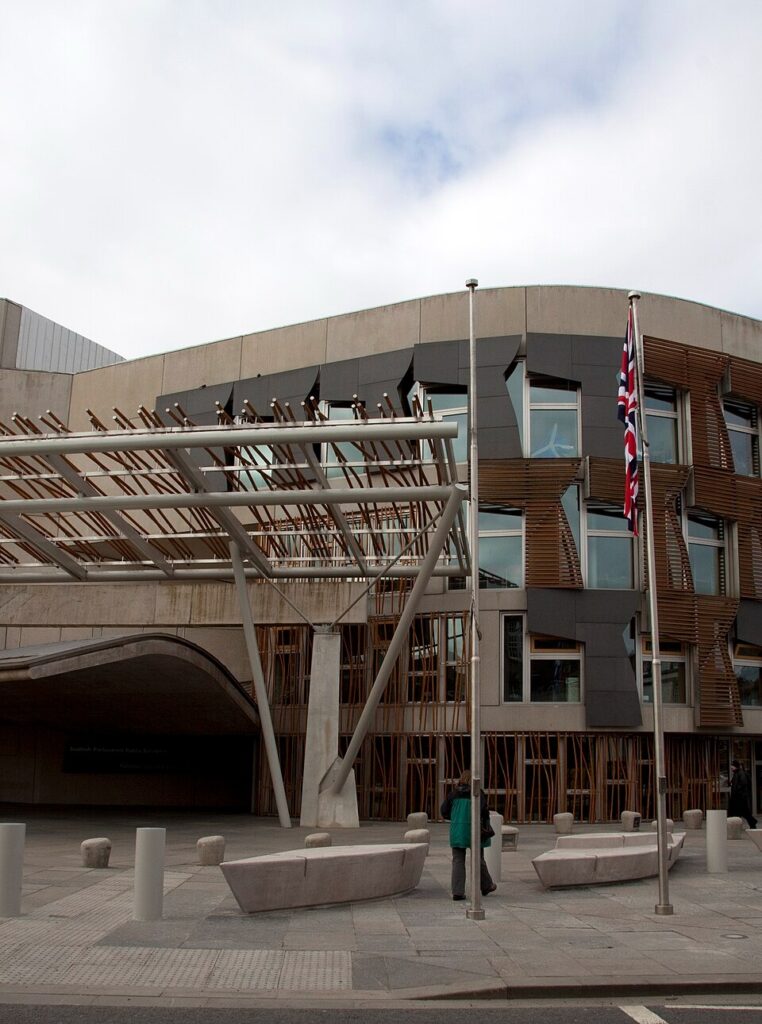
Ultimately, Edinburgh’s political landscape is multifaceted and capable of surprising the public. When Eleanor McLaughlin became the first woman to serve as Lord Provost, it was a sensation, breaking a long-standing tradition of male leadership.
She successfully proved her potential to the electorate and, more importantly, showed that she was a politician who valued action over empty promises.