
The political life of any city is an integral part of its past and present. After all, individual figures are responsible for a particular area’s development and improvement. Read more on edinburghyes.
With the advent of new regulations, human life has gradually become more comfortable and modern. This is especially true when discussing crucial documents like the Universal Declaration of Human Rights. Its provisions guarantee that individuals, their rights, dignity, honour, and freedom are the highest values in any civilised society. This applies to the international level, particularly regarding the protection of human and civil rights.
However, local government is also a fascinating field. Its clear structure and relevant regulations help create the right living conditions in a specific locality. Moreover, in many cities, the municipality has its own captivating history, allowing us to trace the development of various institutions.
Edinburgh, for example, has a unique past concerning the establishment of its mayoral institution. Even the head of the city was referred to slightly differently – the Lord Provost. Yet, the core functions of this official were consistent with the usual “mayoral brief.”
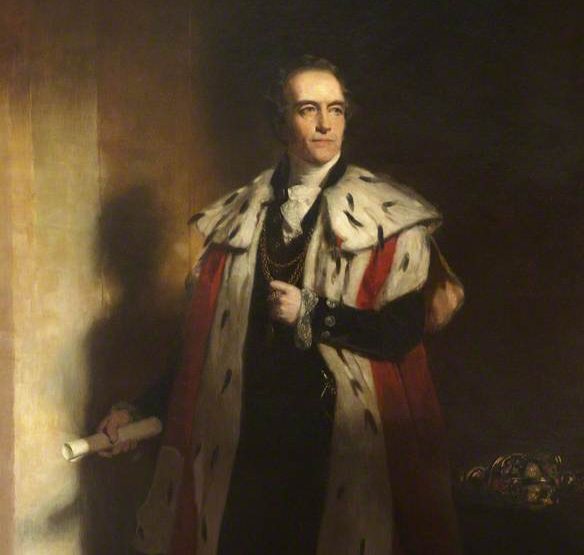
In this article, readers can get to know more about the biography of Adam Black. This prominent figure proved himself to be a talented politician and publisher. He also had the privilege of serving as Edinburgh’s Lord Provost.
Early Life
The future politician was born in Edinburgh on 20th February 1784. His father, Charles Black, was a master builder. It’s worth noting that this was a key figure in any construction project at the time. Therefore, such a position, in modern terms, could confidently be called the precursor to an engineer and architect.
Education and Independent Career
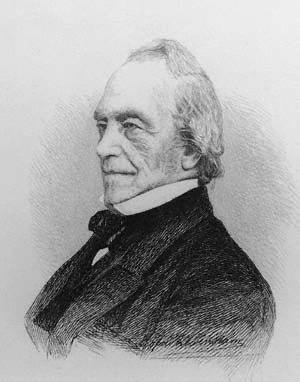
As for Adam himself, his journey, of course, began with his education. His first alma mater was the renowned The Royal High School. After graduating, he became a student at Edinburgh University.
However, his student days soon passed, and the young man had to consider which path to choose to embark on his independent journey.
He decided to settle on bookselling. But since this field was entirely new to young Adam, he initially decided to learn the trade from Mr. Fairbairn, a famous Edinburgh bookseller.
As it turned out, Black showed considerable aptitude in his chosen profession. This allowed him to establish his own business in 1808.
By 1826, he had cemented his reputation as one of the city’s leading booksellers.
A New Achievement
Adam’s success was so significant that in 1827, he acquired the copyright to the crucial publication, the Encyclopaedia Britannica. Although he was joined in this valuable investment by Macvey Napier and Doctor of Laws James Browne.
It’s worth noting that owning the copyright later allowed Black to publish new editions (the seventh, eighth, and ninth) of the said Encyclopaedia.
However, Adam decided not to stop there. His next goal was to obtain the copyright to the legendary Walter Scott’s series of novels – The Waverley Novels. These works were the most widely read and famous in Europe for almost 100 years.
As a result, in 1851, Black’s dream came true, and he successfully purchased the coveted rights.
Political Path
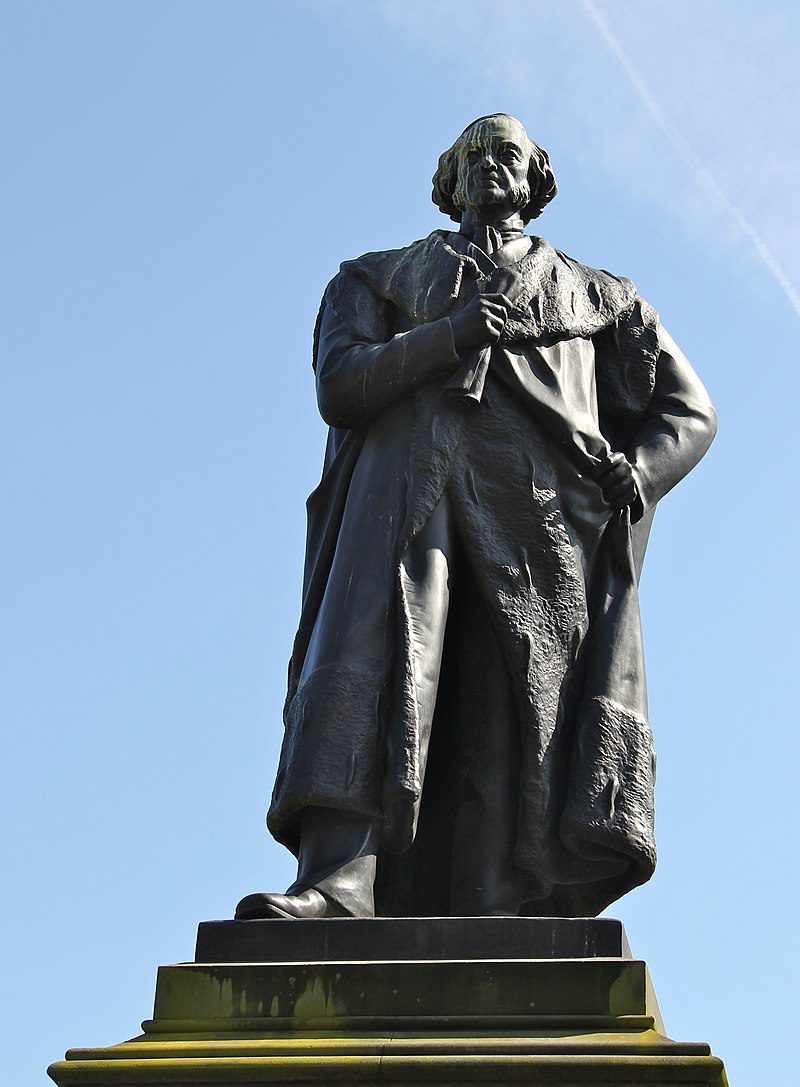
When discussing Black’s biography, one cannot focus solely on his entrepreneurial activities. He was destined to play a prominent role in the development of his native Edinburgh. Furthermore, he even held the position of Lord Provost and represented the city’s interests in Parliament.
It’s worth noting that Adam’s political views leaned towards liberal reform. The Royal Company of Merchants of the City of Edinburgh provided him with a strong foundation, especially at the beginning of his political career. There, he rose from assistant to a fully-fledged specialist and leader.
Crucially, Black’s influence on the aforementioned organisation later played a significant role in his activities, particularly concerning the improvement of the city.
Thanks to his efforts, construction began on the George IV Bridge and the Johnston Terrace Garden next to Edinburgh Castle. Black also paid particular attention to the development of The Merchant Maiden Hospital.
An Important Mission
It’s also important to highlight Black’s crucial role in saving Edinburgh from bankruptcy. Adam began this mission in 1833 after being elected to the reformed City Council and taking on the role of Treasurer.
The city’s debts were simply incredible, and the overall state of affairs left much to be desired. But Black managed to create a scheme for resolving issues with numerous city creditors. This ultimately saved the situation.
Thus, Adam Black can quite rightly be called a man who successfully and skillfully combined two entirely different fields of activity. His political successes can probably be explained by his origins. Adam was born in Edinburgh, so it’s no surprise that he later felt a desire to improve his native city and do good for it. Especially since, as a native resident, he likely had a better understanding of the city’s internal problems at the time.
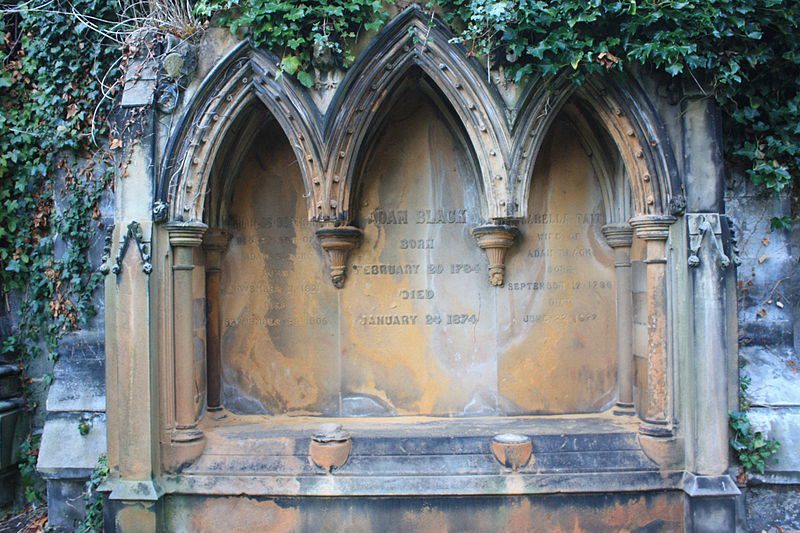
Adam Black’s earthly journey concluded on 24th January 1874. It seems like such a long time ago. Yet, the memory of this man lives on. And the results of his work remain one of the best proofs of his love and devotion to his hometown.