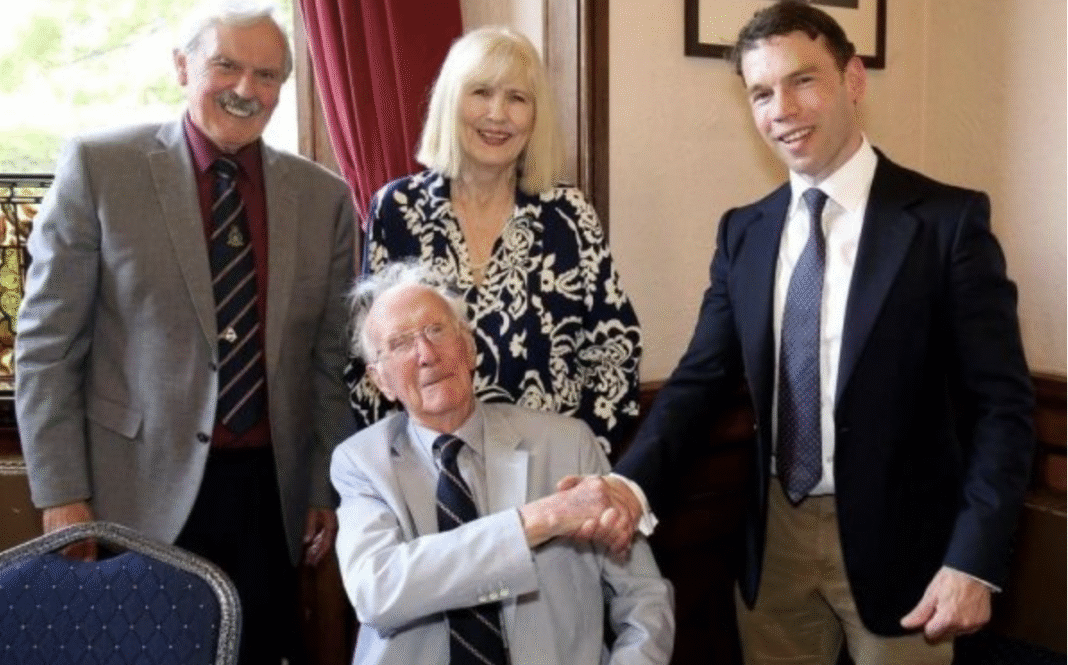

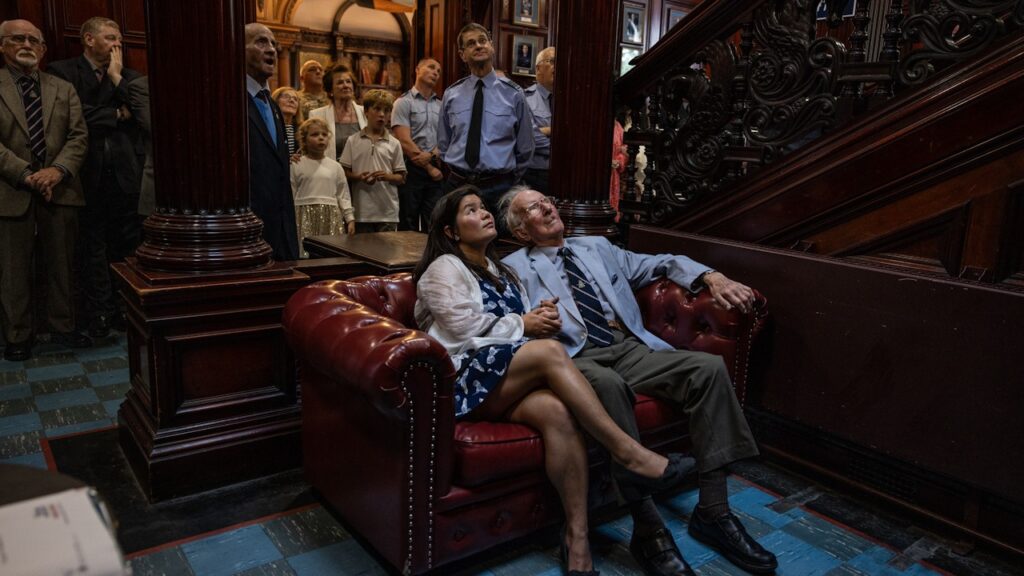
When we picture heroes of the sky, we often think of names etched into the annals of battle. But the true essence of courage is just as often found in the quiet after the fight. Joe, who recently celebrated his 100th birthday, is a living testament to bravery during humanity’s most terrible conflict. His journey is a captivating saga, a life inextricably woven into the illustrious history of 603 (City of Edinburgh) Squadron, Royal Auxiliary Air Force. Find out more on edinburghyes.
This article explores the journey of this distinguished Edinburgher, tracing his path from his first wartime flights to his post-war service in the reserves. Our account draws on verified sources, including official British military publications, records from the RAuxAF Association, and local city archives.
The Dawn of an Aviation Era
While the precise details of Joe McCulloch’s early life remain outside of public record, it is known he was born around the summer of 1924. His childhood and youth unfolded as air power was rapidly transforming from a curious novelty into a formidable force, one capable of reshaping the nation’s defence. For many young British men of that era, joining the Royal Air Force (RAF) was a true calling, an answer to the challenges of a turbulent time. Joe was no exception. The looming threat of another major conflict only strengthened his resolve. He made the fateful decision to dedicate himself to the sky and began his flight training.
Baptism of Fire
With the outbreak of the Second World War, the youthful dream of conquering the skies quickly gave way to the harsh realities of military service. His path to a fighter cockpit ran through the North American Harvard, the training aircraft often nicknamed the ‘pilot maker’. It was in the Harvard that pilots honed complex manoeuvres, learned the fundamentals of teamwork, and laid the foundation for their vital combat skills.
After successfully completing his training, Joe transitioned to the formidable Hawker Hurricane. While it was often overshadowed by the more famous Spitfire, the Hurricane remained the true workhorse of the RAF. His real baptism of fire came far from home, in the scorching skies over Egypt during the North African Campaign. The punishing heat caused engines to overheat, while sandstorms clogged filters and reduced visibility to near zero. Every sortie was fraught with danger, whether escorting bombers or intercepting aircraft from the Luftwaffe and the Italian Regia Aeronautica.
Eventually, military fate took him further still, to India and the Far East theatre of war. Here, the desert landscape gave way to impenetrable jungle, and the dry heat was replaced by suffocating humidity.
Peacetime Service
Long-awaited peace settled over Europe. It might have seemed that his service was at an end, but Joe had no such thoughts. In 1947, he made the conscious choice to continue his military career by joining the legendary 603 (City of Edinburgh) Squadron, Royal Auxiliary Air Force (RAuxAF). This unit was comprised of reservists—people who balanced their civilian lives with a readiness to defend their country at a moment’s notice.
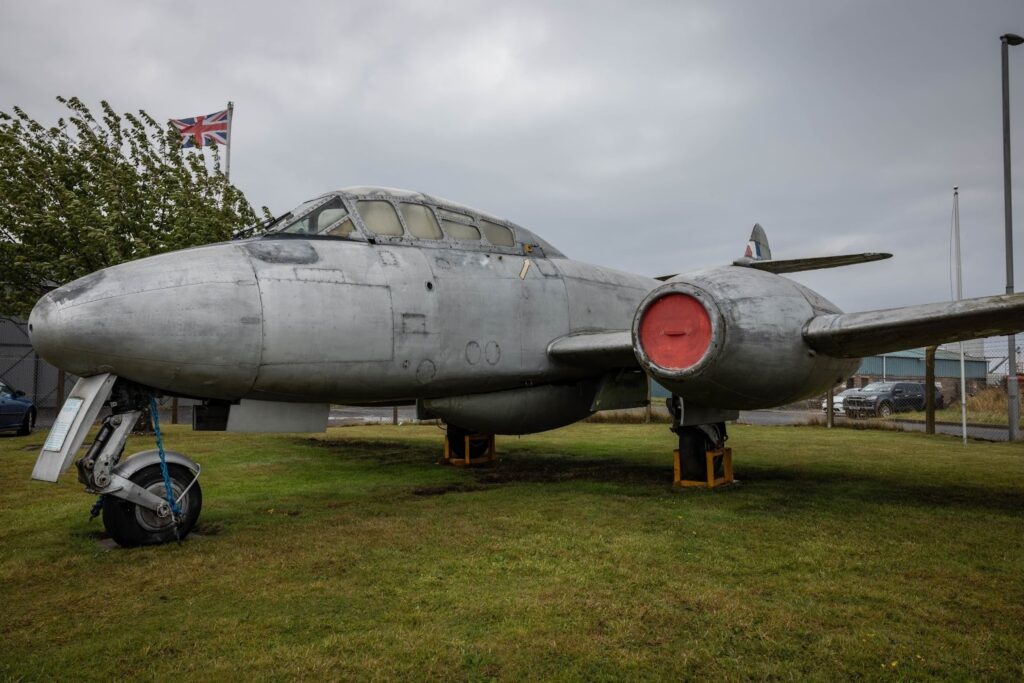
Mr. McCulloch, a battle-hardened veteran, did not hesitate to embrace the new age. He became one of the few pilots of his generation to make the leap into the future, successfully retraining to fly Britain’s first jet aircraft. First, it was the elegant De Havilland Vampire, and later, the twin-engine Gloster Meteor. This required him to forge a unique way of life. By day, he worked as a civil engineer for British Railways, designing bridges; at the weekends, he was dedicated to his duties as a pilot.